






Introduction
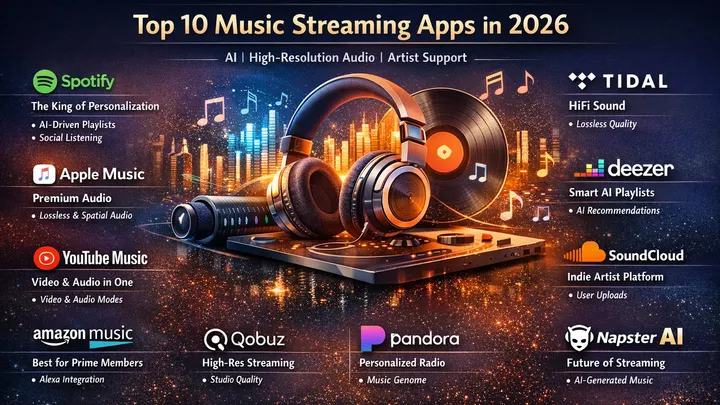
The way we consume music has dramatically transformed over the past decade, and by 2026, music streaming apps have become more than just platforms for listening—they are intelligent ecosystems powered by AI, personalization, and immersive audio technologies.
Today’s users expect more than just access to songs. They want high-resolution audio, real-time recommendations, social interaction, and cross-platform integration. With over 100 million tracks available on major platforms and AI reshaping how playlists are created, the competition among music streaming apps has reached a new level.
In fact, platforms like Spotify continue to dominate global downloads, highlighting the growing demand for digital music consumption worldwide.
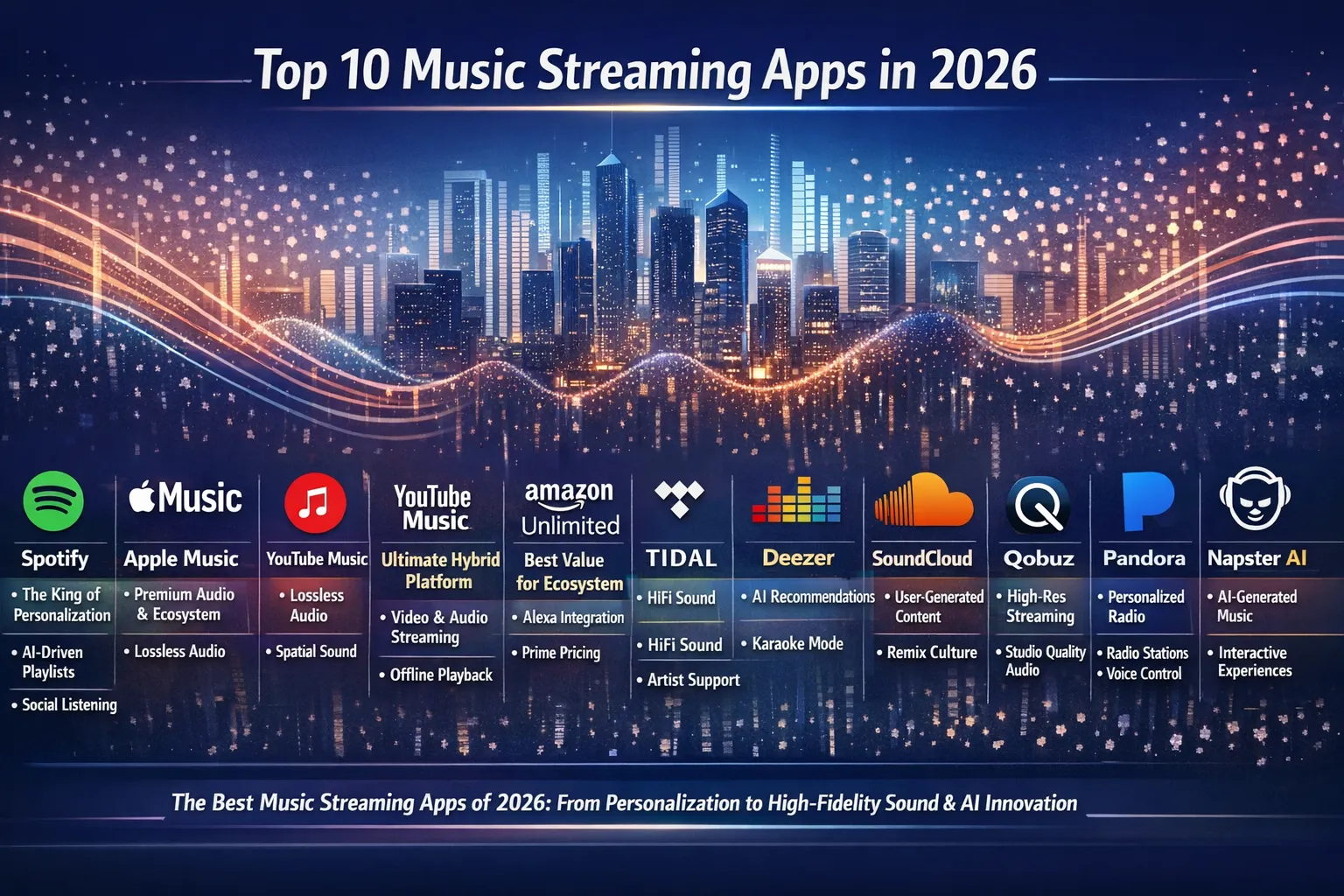
In this article, we explore the Top 10 Music Streaming Apps in 2026, analyzing their features, innovations, and why they stand out in an increasingly competitive market.
1. Spotify – The King of Personalization
Spotify remains the global leader in music streaming, thanks to its powerful recommendation algorithms and massive user base.
Key Features
- AI-driven playlists like Discover Weekly
- Collaborative playlists and social listening
- Podcasts and audiobooks integration
- Cross-platform compatibility
Why It Stands Out in 2026
Spotify’s biggest strength lies in personalization. Its algorithm analyzes listening behavior to deliver highly accurate recommendations. With new features like AI-powered discovery tools, Spotify continues to redefine how users find music.
In 2026, Spotify is not just a streaming service—it’s a music discovery engine.
2. Apple Music – Premium Audio and Ecosystem Integration
Apple Music has positioned itself as a premium service focused on sound quality and seamless integration.
Key Features
- Lossless and Spatial Audio
- Integration with Apple devices
- Exclusive content and live radio
- Lyrics and karaoke mode
Why It Stands Out
Apple Music is widely recognized for its superior audio quality and ecosystem synergy. With over 100 million songs and immersive audio formats, it’s a top choice for audiophiles.
In 2026, it leads the market in delivering high-fidelity listening experiences.
3. YouTube Music – The Ultimate Hybrid Platform
YouTube Music combines video and audio streaming into a single platform.
Key Features
- Switch between video and audio modes
- Massive global content library
- Smart recommendations based on YouTube history
- Offline playback
Why It Stands Out
YouTube Music excels in content diversity. From official tracks to live performances and remixes, it offers a unique listening experience unavailable elsewhere.
4. Amazon Music Unlimited – Best Value for Ecosystem Users
Amazon Music is a strong competitor, especially for users within the Amazon ecosystem.
Key Features
- High-resolution audio
- Alexa voice integration
- Affordable pricing for Prime members
- Extensive music library
Why It Stands Out
Amazon Music provides excellent value, particularly for users already invested in Amazon services.
5. TIDAL – Audiophile’s Dream Platform
TIDAL focuses on delivering high-quality sound and supporting artists.
Key Features
- HiFi and lossless audio
- Artist-focused payouts
- Music videos and exclusive content
- Curated playlists
Why It Stands Out
TIDAL remains a top choice for users who prioritize audio quality and artist support.
6. Deezer – Smart AI Playlist Generation
Deezer continues to innovate with AI-driven music discovery.
Key Features
- Flow personalized playlist
- AI-generated recommendations
- Lyrics and karaoke features
- Cross-platform support
Why It Stands Out
AI-generated playlists are becoming more advanced, allowing users to discover music based on mood, context, and preferences.
7. SoundCloud – Platform for Independent Artists
SoundCloud is the go-to platform for discovering emerging artists.
Key Features
- User-generated content
- Direct artist uploads
- Community engagement
- Remix culture
Why It Stands Out
SoundCloud thrives as a creative hub, giving independent artists a global audience.
8. Qobuz – High-Resolution Streaming for Experts
Qobuz is designed for serious music enthusiasts.
Key Features
- Studio-quality audio
- Editorial content and reviews
- Downloadable high-res files
- Focus on classical and jazz
Why It Stands Out
For audiophiles, Qobuz offers unmatched sound quality and detailed music insights.
9. Pandora – Personalized Radio Experience
Pandora focuses on radio-style streaming.
Key Features
- Personalized radio stations
- Music Genome Project
- Voice-controlled playback
- Offline listening
Why It Stands Out
Pandora is ideal for users who prefer passive listening experiences rather than active playlist creation.
10. Napster AI – The Future of Music Streaming
Napster has re-emerged with a completely new AI-driven approach.
Key Features
- AI-generated music
- Interactive listening experiences
- Personalized content creation
- Integration with creative tools
Why It Stands Out in 2026
Napster represents the future of music streaming, where users are not just listeners but creators. AI-generated music and interactive features are changing the industry.
Conclusion
In 2026, music streaming apps are no longer just platforms for playing songs—they are intelligent ecosystems powered by AI, cloud computing, and immersive audio technologies.
From Spotify’s unmatched personalization to Apple Music’s premium sound quality and Napster’s AI-driven innovation, each platform offers unique advantages.