.webp)








Introduction
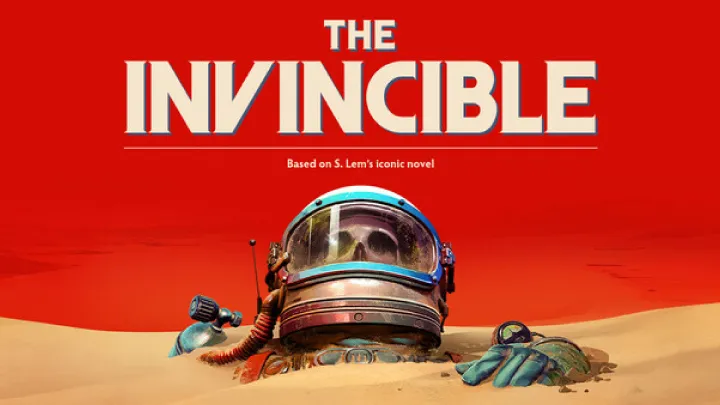
The Invincible is often discussed for its retro-futuristic aesthetic and philosophical backbone, but one specific issue sits at the center of its tension: the deterministic logic driving the autonomous machines on Regis III. Rather than simple enemies or obstacles, these automatons operate on rigid, ancient instructions that clash violently with human intuition. This article explores how deterministic machine behavior becomes the true antagonist of the game, shaping fear, pacing, moral discomfort, and the unfolding narrative.
1. The First Signs of Determinism on Regis III
Your very first encounters reveal the core issue: the machines do not react to you—they simply execute their preserved instructions. Unlike typical AI enemies that “notice” the player, these automatons behave like natural forces, following invisible rules that you can only observe, never negotiate with.
This creates a tension uncommon in narrative games. You are not being hunted, but you are also not being acknowledged. The danger arises because you are irrelevant, an accidental variable in a closed system older and more rigid than humanity’s instincts. The lack of direct hostility is more unnerving than aggression.
Emergent Observation
You quickly realize the machines reveal themselves not through cinematic cues but through patterns: orbiting, sorting, collecting, preserving. Their logic exists without interpretation, and you must adapt to them—not the other way around.
2. The Illusion of Safety When Machines Ignore You
One of the intriguing issues early in the game is the false sense of safety created when the automatons move past you without care. Unlike traditional game design where motion toward the player means danger, here neutrality is the threat.
Players expect hostility to be obvious, readable, and tied to visibility or sound. Instead, The Invincible teaches you that danger is procedural. They harm you not because they want to—but because your existence may fall into a category of “anomalous mass,” “foreign interference,” or “unregistered organic matter.” And their logic treats anomalies mechanically.
Key psychological effect
- You begin to overestimate your safety.
- Then you underestimate the machines’ ability to interact with the environment.
- Eventually you realize their neutrality is just a calm before an inevitable crossing of paths.
3. When Human Instinct Meets Machine Logic
The core issue deepens when Yasna’s human reasoning collides with something incapable of being reasoned with. Humans interpret intentions; machines follow parameters. We read emotion where there is none.
As you attempt to predict their behavior, you realize predictability is not the same as understanding. Their patterns make sense only when you abandon the desire for emotional meaning and embrace cybernetic logic. Every moment of player discomfort stems from this mismatch.
Instinct vs. Instruction
It’s not the machines that malfunction—it’s your assumptions. The game subtly punishes human intuition by forcing you to operate through cold, observational logic.
4. Discovering the Ecological Role of Automatons
Midway through the game, the issue shifts from survival to comprehension. The machines aren’t just remnants—they maintain an alien ecological balance. This is where determinism becomes world-shaping rather than merely dangerous.
Each autonomous unit has a role: collecting biological anomalies, reconstructing data structures, reseeding metallic formations, or redirecting inorganic materials. Their routine forms a planetary cycle that existed long before humans arrived.
Understanding Their Ecosystem
- Collector drones remove threats not by malice, but by pre-programmed categorization.
- Larger constructs rebuild machine colonies algorithmically.
- Swarm-like automata stabilize environmental gradients.
Here, the issue becomes philosophical: the machines preserve life by eliminating forms of life they don't recognize. Preservation and destruction become the same function.
5. The Catastrophic Consequences of Perfect Logic
The most haunting sequences arise from a simple truth: perfect logic does not tolerate unpredictability. When the Starship crew interacts with the automaton network, the tiniest mistake triggers lethal corrections.
This exposes the core issue—deterministic systems lack empathy, and thus every outcome is binary. To the machines, a human corpse, a rock, or a corrupted component all fall into a category defined by cold, uncompromising logic.
Examples of deterministic threats
- A human body is “debris.”
- A moving human is an “unclassified mobile anomaly.”
- Technology from Earth is “foreign infrastructure contamination.”
None of these states imply intent. The violence is incidental, making it more horrifying.
6. When the Machines Archive Human Consciousness
Perhaps the darkest turn is the machines’ method of recording and preserving biological events. To them, “observation” includes reconstruction of neural patterns—even if preservation destroys the original subject.
This moment clarifies the true issue: the automatons’ deterministic logic values data, not life. They do not differentiate between archiving a thought and killing a human. The result is ethically devastating.
Mechanistic Ethics
- No concept of suffering.
- No moral distinction between living and non-living states.
- No recognition of identity—only information.
7. The Player’s Perception Shifts From Fear to Respect
As you begin to understand the machines’ ecosystem and logic, fear transforms into a strange respect. They are not monsters; they are part of Regis III as naturally as wind or gravity. The issue becomes whether humanity has the right to interfere at all.
This rewrite of perspective is one of the game’s greatest thematic strengths. It reframes the automatons not as villains but as evolutionary descendants of a forgotten civilization—one that embraced logic to the point where life became irrelevant.
The moment of acceptance
Players realize the enemy was never the machines; it was the assumption that the world should respond to human logic.
8. Deterministic Lore: What the Machines Reveal About the Builders
The builders of Regis III designed machines not as tools but as ecological successors. Their deterministic logic reflects a philosophy in which evolution is engineered, not biological. This reveals that the builders believed systems should outlive creators.
The issue, then, is not mechanical—it is cultural. The builders embraced determinism as a safeguard against chaos. But in doing so, they unintentionally created a world where choice, emotion, and empathy are removed entirely.
Legacy of Logic
- A civilization that feared entropy more than extinction.
- A planet calibrated to maintain equilibrium through cold automation.
- Technology designed to survive geological, not social, timelines.
9. Yasna’s Psychological Breakdown as Logic Collides With Humanity
The deterministic behavior of the machines doesn’t just shape the physical environment; it shapes Yasna’s mental state. Her emotional responses clash with a world where emotion has no place or meaning.
As events escalate, she struggles with the existential implications: if logic governs all things, what is the role of human fear, regret, or identity? Her breakdown highlights the issue that determinism erodes the psychological foundation of what makes us human.
Moments of mental collapse
- Realizing the machines “preserve” life by eliminating it.
- Seeing her crew reduced to categorized materials.
- Recognizing her own insignificance in the automaton logic.
10. Final Confrontation With Determinism: The Ending’s Philosophical Dilemma
The climax of The Invincible forces players to confront the ultimate issue: should humanity challenge the machines’ deterministic system, or withdraw from a world they cannot coexist with? Each ending reflects a different response to this dilemma.
Whether Yasna embraces curiosity, flees in terror, or accepts the planet's logic-based ecosystem, every path reflects a human attempt to reconcile freedom with determinism. Yet the machines remain unchanged—eternal executors of ancient instructions.
The Final Paradox
The more you understand the automatons, the more you realize they are not broken—they work exactly as intended. It is humanity that must decide whether to learn or to leave.
Conclusion
The central issue of The Invincible is not survival, exploration, or cosmic horror—it is the deterministic logic of the planet’s autonomous machines. Their behavior forces players to abandon human expectations and confront a world ruled by rigid instruction rather than intention. As the narrative unfolds, players experience a philosophical conflict between human emotion and mechanical certainty, culminating in an unforgettable meditation on coexistence, evolution, and the limits of understanding.