.webp)







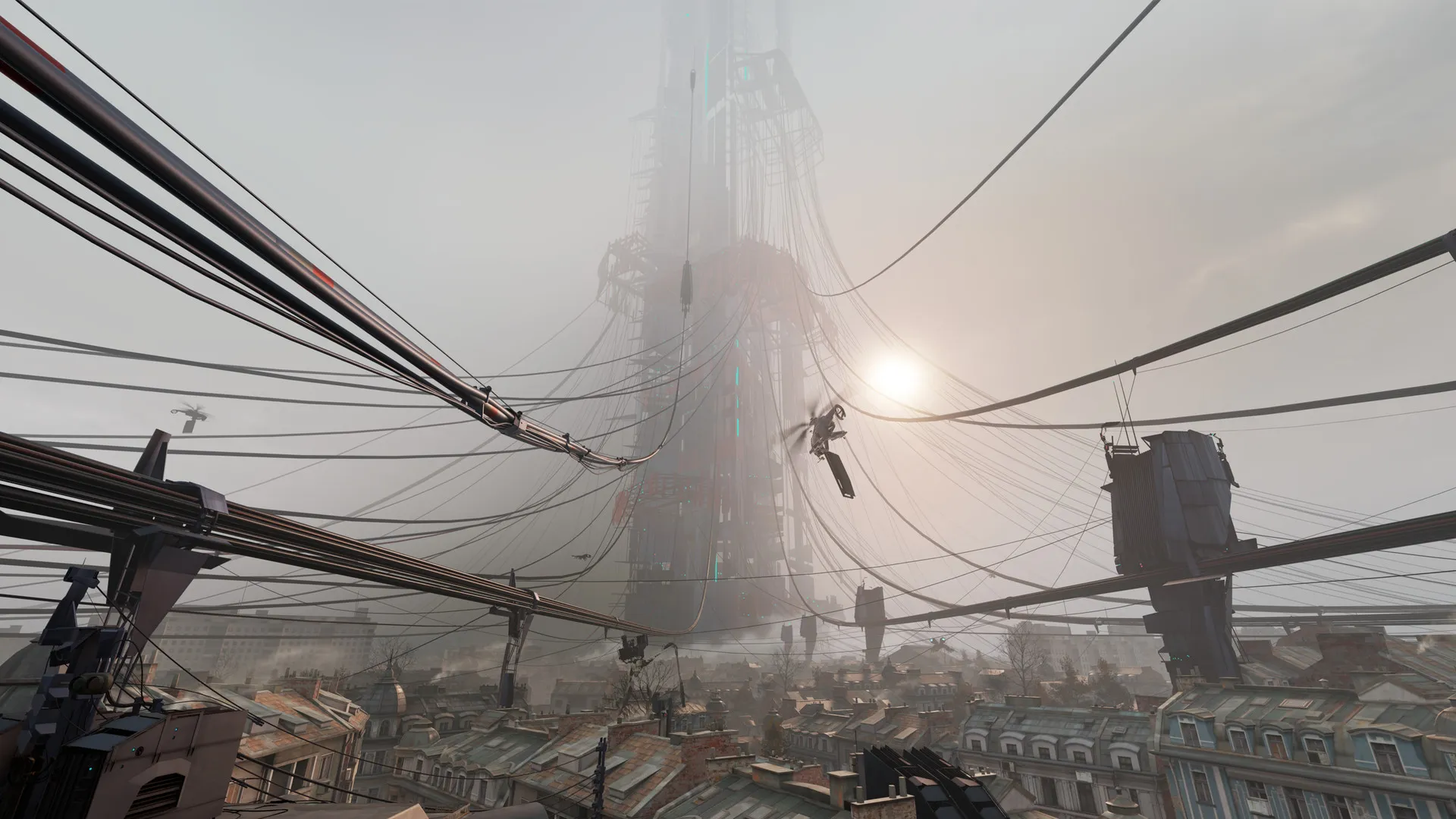
Half-Life: Alyx is often praised for validating virtual reality as a serious platform for AAA game design, but that praise alone understates its most radical achievement. The game does not merely adapt a traditional first-person shooter into VR; it reconstructs narrative delivery around physical presence, spatial awareness, and hand-based interaction. This article examines how Half-Life: Alyx transforms environmental interaction into a storytelling system, where meaning is communicated through physical engagement rather than exposition, dialogue, or scripted cinematics.
1. Relearning Space as the Player’s First Challenge
The opening moments of Half-Life: Alyx immediately disrupt traditional FPS literacy.
Players must physically lean, reach, crouch, and peer into spaces instead of relying on camera control. This recalibration forces players to relearn how space functions as an interactive volume rather than a visual backdrop.
This spatial retraining is not optional. It establishes embodiment as the primary mode of engagement and primes the player to absorb narrative through movement rather than observation.
2. Hands as the Primary Interface With the World
Unlike traditional control schemes, hands are not symbolic inputs.
They exist as physical extensions of the player’s body, capable of fine-grained interaction, hesitation, and intention.
Tactile authorship
Every grab, release, and fumble becomes part of the player’s personal story.
3. Environmental Storytelling Through Physical Discovery
Story information is embedded in objects, spaces, and textures.
Players uncover narrative fragments by opening drawers, inspecting debris, and manipulating abandoned technology.
Discovery through action
Narrative comprehension requires physical participation, not passive viewing.
4. Combat as Spatial Problem-Solving, Not Reflex Testing
Gunplay in Half-Life: Alyx is deliberately constrained.
Limited ammunition, slow reloads, and physical weapon handling shift combat away from speed and accuracy.
Embodied tension
Stress emerges from physical vulnerability rather than numerical difficulty.

5. The Gravity Gloves as Narrative Technology
The gravity gloves are more than a convenience tool.
They formalize distance interaction while reinforcing physical intent and anticipation.
Anticipatory design
Reaching becomes a deliberate act rather than an abstract command.
6. Horror Built on Vulnerability, Not Shock
Fear in Half-Life: Alyx is not driven by jump scares.
It arises from exposure, limited vision, and the need to physically commit to risky actions.
Forced proximity
Enemies feel dangerous because players must approach them physically.
7. Pacing Controlled by Physical Fatigue
The game’s rhythm respects human endurance.
Movement speed, interaction frequency, and encounter density account for physical strain.
Human-centered pacing
The body becomes a balancing factor in narrative flow.
8. Environmental Puzzles as Spatial Literacy Tests
Puzzles teach players how to read space.
They require understanding depth, occlusion, and physical alignment.
Spatial comprehension
Solving puzzles reinforces the player’s embodied relationship with the world.
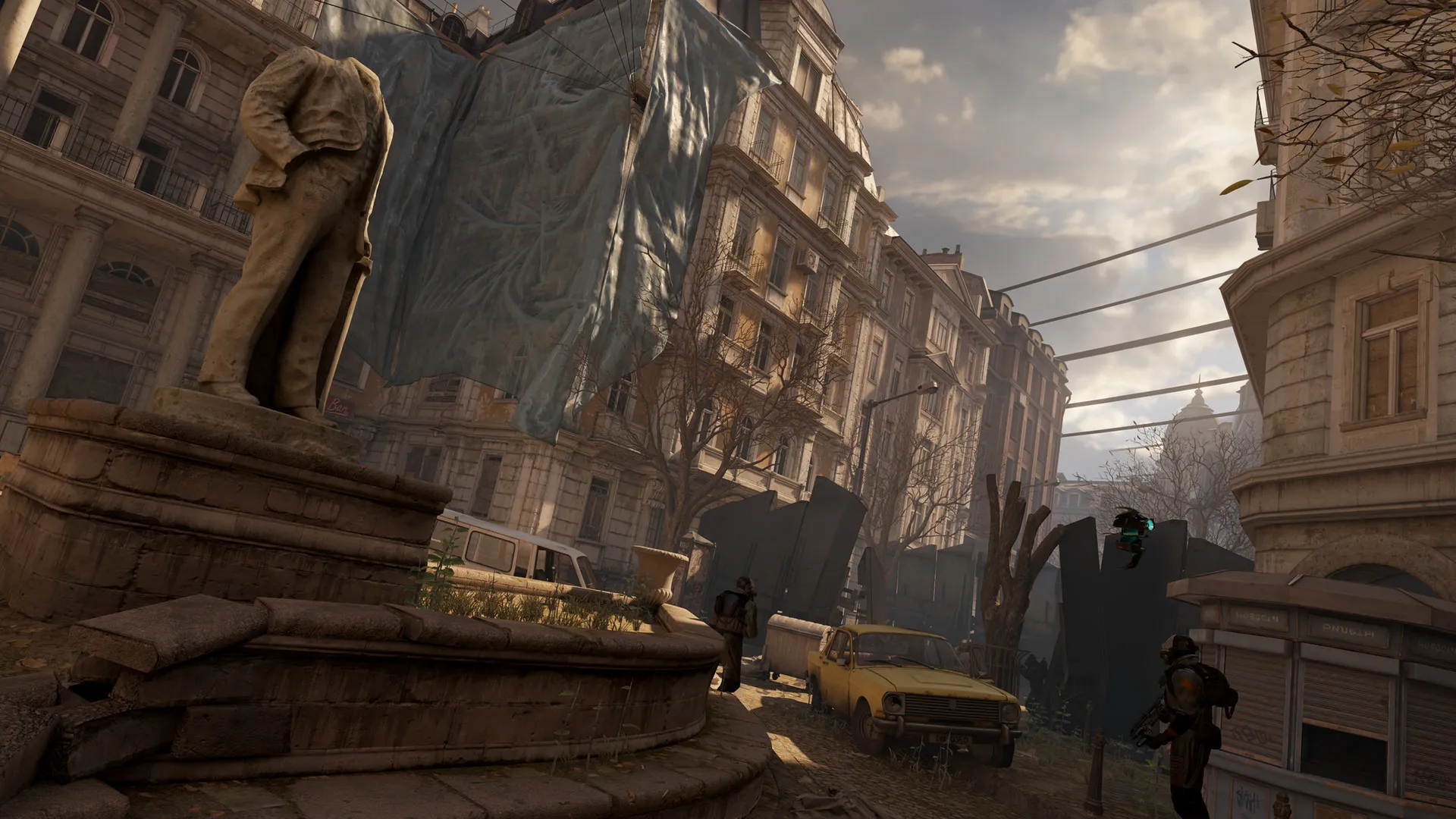
9. Minimal HUD and the Trust in Presence
Traditional UI elements are minimized.
Information is communicated through sound, object behavior, and physical feedback.
Diegetic clarity
The world itself replaces the interface.
10. Why Half-Life: Alyx Could Only Exist in VR
The game’s narrative structure depends on embodiment.
Removing physical presence would collapse its storytelling logic.
Half-Life: Alyx is not VR-compatible; it is VR-native.
Conclusion
Half-Life: Alyx redefines how stories can be told in games by centering physical presence as the primary narrative mechanism. Through hand-based interaction, spatial design, and embodied vulnerability, the game communicates meaning without relying on traditional exposition. Every action, from opening a door to reloading a weapon, becomes a narrative beat shaped by the player’s body. In doing so, Half-Life: Alyx establishes a new design paradigm where storytelling emerges from presence itself rather than scripted events.