The Ultimate Overwatch Tactical Manifesto: Advanced Tips and Guides for Dominating the 5v5 Era
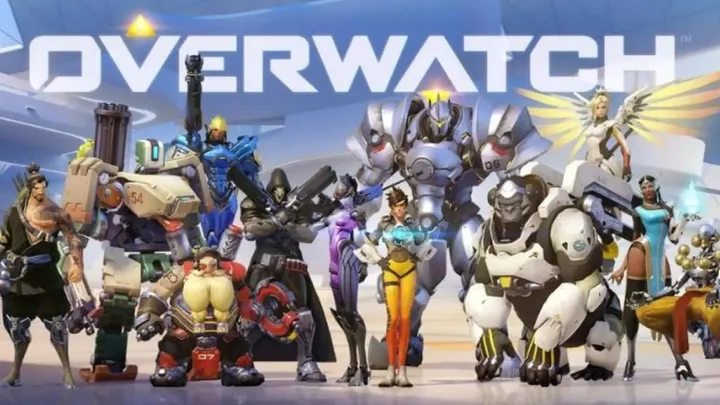
Overwatch has undergone a massive evolution since its launch, shifting from a 6v6 operational puzzle into a faster, more lethal 5v5 brawler environment. While raw mechanical skill and accurate aim will always carry value, true mastery of modern Overwatch demands an acute understanding of tempo, resource economies, and spatial positioning. With only one Tank on the field, every mistake is amplified, and every single resource spent carries double the weight. Dropping into the competitive queue without a structured tactical game plan is a fast track to a losing streak.
To consistently win matches and climb the competitive skill tiers, you must treat every game as a fluid equation of cooldown tracking and map control. Success is engineered by understanding role responsibilities, mastering positional hygiene, and synchronizing ultimate abilities with your squad. This comprehensive guide breaks down the essential tactical blueprints across ten structural pillars. From optimizing your interface before the match to clutching out the chaotic overtime push, this playbook will elevate your mechanical and strategic execution to a professional level.
1. Pre-Match Blueprint: Optimizing Settings and Interface for Peak Awareness
Your path to high-level mastery starts in the settings menu long before the hero selection screen appears. The default Overwatch configuration prioritizes cinematic presentation over competitive clarity, which can actively hinder your situational awareness. Your first priority should be navigating to your video options and disabling Dynamic Reflections and Local Fog Detail. These settings add intense visual clutter and particle effects that obscure enemy head outlines during frantic team fights. Ensure your Field of View (FOV) is maxed out at 103 to maximize your peripheral vision, allowing you to catch flanking flankers early.
Equally critical is your custom role interface. Turn on the Allied Health Bars and Show Outline Allies options across all hero kits, not just for the Support role. Knowing the exact health pool of your Tank while playing a Damage hero allows you to make informed decisions on whether to push aggressively or peel backward. Finally, configure your sound settings to utilize Dolby Atmos for Headphones. Overwatch possesses an incredibly accurate spatial audio engine; maximizing this setting allows you to track the exact verticality and direction of an approaching Reaper footstep or a Pharah jump jet through solid walls.
2. Selecting Your Identity: Understanding Team Compositions and Synchronicities
Before the spawn doors open, your team composition establishes your tactical boundaries. Modern Overwatch gameplay is broadly divided into three core archetypes: Poke, Rush, and Dive. A Poke Composition relies on long-range hitscan or projectile heroes (like Sigma, Ashe, and Hanzo) to whittle down enemy health pools from a safe distance before they can close the gap. A Rush Composition utilizes high-speed ground heroes (like Reinhardt, Mei, and Lucio) to aggressively speed-boost into the enemy team, overwhelming them with raw, close-quarters cleave damage.
A Dive Composition focuses on maximum vertical mobility and synchronized aggression, utilizing heroes like Winston, Tracer, and Genji to instantly collapse onto isolated backline targets. To excel in the competitive ladder, you must recognize what style your team is running and adapt your selection to match. Mixing a low-mobility sniper into a high-speed dive composition creates a structural disconnection, leaving you vulnerable to counter-attacks while your team is across the map.
- Poke Strategy: Maintain maximum distance, abuse high-ground sightlines, and prioritize resource depletion.
- Rush Strategy: Group tightly, rotate behind physical map cover, and use speed cooldowns to force close-range brawls.
- Dive Strategy: Identify an isolated target, coordinate movement cooldowns, and execute high-burst damage simultaneously.
3. Spawn Room Mechanics: Designing the Early Map Rotation Plan
The first 30 seconds of an Overwatch match dictate the positioning momentum of the entire first point. Whether you are attacking or defending, your squad must establish a clear Path of Rotation tank paths that minimizes exposure to long enemy sightlines. When exiting the spawn doors as an attacking team, never mindlessly stroll down the main choke point where a defending Widowmaker or Hanzo can pick you off instantly. Instead, route your path through indoor hallways, subterranean tunnels, or side alleys.
For the defending team, your early-game priority is managing the Choke Point Edge. Do not stand directly at the enemy spawn doors; this grants the attackers a massive advantage, as they can instantly step back into their spawn room to heal or swap heroes to counter your composition. Set up your defensive line at the first major physical bottleneck of the map that grants your team easy access to high ground and natural cover, forcing the attackers to burn through their defensive cooldowns just to cross the threshold.
4. Tank Sovereignty: Space Creation and the Art of Retaining Corners
Playing the sole Tank in a 5v5 environment is the most demanding role in the game. You are no longer just a meat shield; you are the physical anchor of your team's space. The most fundamental concept a modern Tank must master is the Concept of Corner Hygiene. Corners are the only unbreakable shields in Overwatch. When pushing forward, always move from one piece of natural map geometry to the next. Never stand completely in the open, even if your shield is at full health pool capacity.
- Aggressive Cooldown Baiting: Step past a corner to tempt the enemy into throwing high-value abilities like Ana’s Sleep Dart or Brigitte’s Shield Bash, then quickly step back into cover.
- Resource Management: Never let your defensive barriers (like Reinhardt's Shield or Sigma's Kinetic Grasp) completely break; drop them at 20% health to preserve their utility for saving stuck teammates.
- Offensive Threat Generation: Walk into enemy space with your primary firing weapon active to force their squishy damage heroes to back away, naturally yielding high-ground control to your team.
5. Damage Optimization: Off-Angle Positioning and Target Prioritization
As a Damage (DPS) hero, your primary goal is not simply padding your scoreboard damage stats; it is securing elimination confirmations. The single most effective way to achieve this is through Off-Angle Positioning. If your entire team is shooting down a single linear hallway, the enemy Tank can easily mitigate all incoming projectiles with a single barrier. By positioning yourself 30 to 45 degrees away from your main team axis, you force the enemy team to split their attention and expose their unprotected flanks.
Target prioritization is what separates hardstuck players from elite marksmen. Shooting a Tank that is being actively pocketed by two Support heroes is an inefficient use of resources. You must actively look past the Tank to pressure the backline supports or contest enemy flankers. If an enemy Ana or Kiriko is forced to throw their healing output and survival cooldowns at each other just to survive your off-angle pressure, they cannot heal their Tank, causing the front line to organically collapse without you ever firing a bullet at them.
6. Support Synchronization: Mastering Utility Over Raw Healing Output
In the modern 5v5 landscape, a Support player who only provides raw healing output is actively throwing away value. Healing only delays a defeat; utility engineers a victory. To carry matches as a Support, you must actively maximize the offensive capabilities of your utility kit. This means using Ana's Biotic Grenade offensively to anti-heal enemy groupings, using Zenyatta's Discord Orb to melt aggressive Tanks, or using Kiriko's Protection Suzu to clean game-changing crowd control effects at precise moments.
Support synergy is also vital for backline survival. The two Supports must establish a Peel Relationship. If you are playing Ana and a Tracer dives you, your co-Support (such as a Brigitte or Lucio) must instantly shift their focus to protect you. Coordinate your ultimate utility tracking so you do not overlap defensive ultimates; utilizing both Zenyatta's Transcendence and Lucio's Sound Barrier in a single team fight leaves your backline completely defenseless against the enemy's next ultimate rotation cycle.
- Offensive Cooldowns: Treat damage-boosting or anti-healing abilities as primary engagement tools rather than afterthought reactions.
- Proactive Peeling: Keep your co-Support within your direct line of sight to cross-heal each other through aggressive flank attempts.
- Ultimate Economy: Communication is non-negotiable; explicitly call out who will use their defensive ultimate first to counter incoming wipes.
7. Ultimate Economy: The Strategic Art of Team Fight Tracking
Ultimate abilities are the most powerful currency in Overwatch, and managing this economy dictates long-term match progression. A massive structural mistake made in lower skill tiers is the Ultimate Overinvest. If your team secures two early picks and is winning a fight 5v3, using an ultimate like Genji’s Dragonblade or Zarya’s Graviton Surge is a massive waste of resources. This is known as an ultimate over-investment, and it leaves your team starved for the subsequent engagement where the enemy team will hold the advantage.
To master ultimate tracking, look at the game through a framework: win fights with dry resources or investment resources. If the enemy team initiates a fight using three ultimates and you choose to save yours, it is often optimal to accept a clean defeat in that specific team fight. By giving up that point progression or map space cleanly, you enter the next engagement with a massive ultimate economy advantage, allowing you to secure an easy team wipe and reclaim the map momentum.
8. High-Ground Mastery: The Physics of Tactical Vertical Advantage
The physical geometry of Overwatch maps is heavily optimized for vertical gameplay, yet many players treat the game as a flat, two-dimensional plain. Holding the High Ground grants your team a massive mathematical and mechanical advantage. From an elevated position, you can easily peek over enemy barriers to land critical shots on their backline, while the enemy team must aim upward at awkward vectors, exposing only their heads as targets.
Furthermore, high ground acts as a built-in safety mechanic for low-mobility heroes. If an aggressive Tank or DPS attempts to dive you while you are on a ledge, you can simply step backward away from the lip of the structure to completely break their line of sight and self-heal. If they expend their mobility cooldowns (like Winston's Jump Pack) to reach you, you can simply drop down to the main ground floor, leaving them stranded at high altitude while your team collapses on their front line below.
9. The Mid-Game Climax: Push Dynamics and Managing Respawn Stagger
The mid-game phase of any match is a chaotic dance of respawn management. The single most common reason teams lose captured objectives is Staggering. When a team fight is definitively lost and three of your teammates are dead, your immediate goal should be to either die as fast as possible on the objective or escape back to spawn safely. Running around a corner to prolong your life for an extra ten seconds delays your respawn timer, keeping your team locked in a perpetual 4v5 disadvantage.
Conversely, when your team wins an engagement, you must transition into an Aggressive Containment mindset. Send your mobile DPS or Tank forward past the captured objective to hold the enemy at their next natural chokepoint. This prevents the enemy team from setting up a coordinated engagement path, forcing them to burn precious match time just trying to clear your forward scouts while your payload or capture progress ticks up completely uncontested in the background.
10. Overtime Mastery: Clutching Fights When the Clock Hits Zero
When the match timer expires and the siren blares, Overwatch changes from a tactical chess match into a high-stakes psychological war. The rules of engagement tighten, and panic becomes your worst enemy. During an Overtime Scenario, the attacking team must prioritize keeping at least one high-mobility hero (like Tracer, Wrecking Ball, or Lucio) constantly touching the objective boundaries to stall the burn meter, while the rest of the team focuses on secure kills.
For the defending team, focus entirely on displacement and target isolation. Ultimates that completely deny physical space, such as Roadhog's Whole Hog, D.Va's Self-Destruct, or Mei's Blizzard, should be saved explicitly for the final five seconds of overtime. Force the attackers into a brutal binary choice: step off the objective to dodge your ultimate and lose the match instantly, or stand inside your lethal hazard zones where your team can easily clean them up for a definitive match completion victory.
Conclusion
Mastering modern Overwatch is a continuous test of strategic calculation, psychological fortitude, and high-speed mechanical execution. By optimizing your settings before the match, recognizing composition identities, respecting structural map geometry, and tightly managing your ultimate economy, you strip away the elements of randomness from your competitive games. There are no shortcut mechanics to ranking up; success is built one clean corner rotation and one perfectly called target focus at a time. Take these guides, coordinate with your teammates, and step onto the battlefield with the calculated precision of a champion. The path to the top tiers is waiting for those disciplined enough to claim it.