1. Introduction
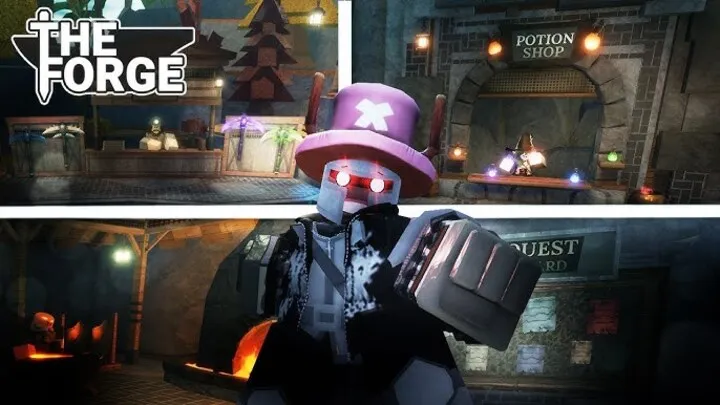
Roblox: The Forge stands as one of the platform's most ambitious action RPG sandbox titles, merging open-world exploration, layered progression, high-difficulty combat, and a deep crafting–forging system that defines a player’s entire journey. Unlike traditional Roblox experiences that emphasize quick play sessions and lightweight mechanics, The Forge builds itself around the concept of long-term character development and resource accumulation, encouraging players to engage with the environment as both a battleground and a living ecosystem. As its name implies, forging is not just one system among many—it is the central pillar through which players evolve, expand their capabilities, and eventually reshape the world around them.
Since its explosion in popularity, the game has been recognized for its intricate design, emergent player behavior, dynamic economy, and surprisingly deep interplay between combat roles, crafting professions, environmental hazards, and boss-driven progression. This encyclopedic analysis provides a full examination of every component of The Forge, offering a complete reference for players, designers, and anyone studying modern Roblox worldbuilding.
2. Game Overview
At its core, The Forge functions as an action RPG designed around three pillars: exploration, combat, and forging progression. The game world is structured into a series of interconnected zones, each containing unique biome types, resource nodes, enemy categories, environmental mechanics, and narrative fragments. The primary loop revolves around travelling between them, gathering materials, facing escalating threats, and returning to crafting stations where gear upgrades and forging blueprints form the backbone of character evolution.
While many Roblox games rely heavily on surface-level leveling systems, The Forge introduces a more layered approach. Stats are influenced by equipment rather than traditional experience-based leveling, creating a gear-driven progression that rewards deep crafting knowledge. Each forged item contains traits, modifiers, and durability factors that meaningfully influence gameplay. The game’s combat system emphasizes timing, mobility, and precision, leaning more toward a Souls-like or Monster Hunter–inspired philosophy rather than the simpler hit-and-run mechanics common to Roblox titles.
The development team behind The Forge maintains an iterative update structure, steadily enriching the world with more enemy variants, new minerals and forging materials, expanded crafting trees, seasonal events, and large-scale world changes that reshape the meta. The result is a game that feels alive, consistently evolving, and filled with long-term depth.
3. World & Environmental Structure
The world of The Forge is divided into large, seamless areas that prioritize verticality, traversal complexity, and resource distribution patterns. Each biome serves a functional gameplay purpose. Forest regions supply basic materials like wood and low-tier ores. Mountain areas introduce wind hazards, narrow cliffside pathways, and higher-grade minerals. Desert zones contain rare heat-infused metals essential for high-tier weaponry. Caverns and underground systems act as the primary late-game environments, containing unique monsters, blackstone variants, unstable geothermal vents, and boss lairs.
Weather systems dynamically alter combat conditions. Storm zones reduce visibility, change enemy aggression patterns, and increase environmental hazards such as lightning strikes or falling debris. Temperature mechanics in certain areas require players to forge specialized gear resistant to heat or cold, reinforcing the importance of crafting as a survival requirement rather than an optional enhancement.
Exploration is nonlinear, and while players can attempt to venture into high-level zones early, the game organically teaches progression through damage thresholds, resource limitations, and equipment gating. Many zones house hidden alcoves with lore tablets, rare mineral veins, or unique mob spawns, encouraging deep exploration and repeated traversal even for late-game players.
4. Core Gameplay Loop

The fundamental gameplay loop in The Forge consists of four repeating phases. First is resource acquisition, where players collect ores, plants, beast materials, elemental fragments, and environmental catalysts. Second is combat-driven material gathering, in which defeating enemies and bosses yields drops needed for advanced forging. The third phase is crafting, where players return to designated hubs to refine, forge, and upgrade equipment. The fourth phase is expedition, where players re-enter the world with improved gear, ready to tackle more dangerous content and unlock access to new forging tiers.
This loop’s strength lies in the way each phase reinforces the others. Crafting enables exploration, exploration enables combat, combat enables progression, and progression unlocks even deeper crafting opportunities. The loop mirrors the structure of classic RPG progression systems but adapts them into a Roblox-friendly design that encourages cooperation, community sharing of materials, and pattern mastery.
Unlike many Roblox titles, The Forge punishes careless play. Dying results in durability loss, resource drops, or in high-tier zones, permanent loss of specific rare materials. This increases the stakes of long expeditions and heightens the importance of teamwork.
5. Combat System
Combat in The Forge is one of the game’s defining features, offering a high-skill system built on dodge timing, directional attacks, hitbox precision, and stamina-based management. The game avoids the typical “swing spam” mechanics seen in mass-produced Roblox fighters. Instead, players must learn enemy animations, read tells, exploit openings, and manage spacing effectively.
Weapons vary significantly in speed, range, combo potential, and elemental attributes. Heavy weapons deliver crushing blows capable of breaking enemy posture but require careful timing. Light weapons focus on mobility and precision, enabling players to weave in and out of enemy attacks. Magic tools and elemental weapons provide ranged options but depend heavily on mana regeneration mechanics and cooldown spacing.
Boss encounters represent a major portion of The Forge’s combat depth. Each boss has multiple phases, stance-breaking mechanics, resistances, and complex arena layouts that force players to adapt. Boss arenas often incorporate environmental elements like fire geysers, falling rocks, or corrosive pools that can be turned to a player’s advantage.
Team battles introduce synergy mechanics, where players can combine elemental attacks for amplified effects—such as freezing an enemy before striking them with a shatter-boosted heavy attack.
6. Forging, Crafting & Resource Economy
Forging is the centerpiece of the game, acting as both the thematic and mechanical heart of the experience. Every item—whether a sword, armor piece, tool, or consumable—requires specific combinations of refined materials, catalysts, and elemental essences. Forging stations allow players to smelt raw ores, purify rare minerals, craft alloys, and fuse enchanted components.
The forging tree is vast, divided into multiple tiers that correspond to biome difficulty and enemy strength. Low-tier items teach players foundational systems, such as combining iron and plant-based reagents. Mid-tier items introduce unique mechanics like heat levels, cool-down timing, and alloy stability. Late-game forging incorporates ritual-based workbenches that require multiple players to collaborate, as well as rare catalysts dropped only from elite bosses.
Each item has traits that impact gameplay: durability, elemental bonuses, weight, swing speed, and resistance modifiers. Additionally, crafting failures can result in flawed or unstable items, reinforcing the need for upgrading forging skills and acquiring higher-quality materials.
The game includes a player-driven economy where materials can be traded or sold. Market fluctuations respond to patch changes, seasonal content, and boss farming trends, creating a dynamic ecosystem similar to MMORPG economies.
7. Progression & Character Development