.webp)






Foundation is a medieval city-building game that focuses on organic development, free-form construction, and managing villagers rather than strict grid planning. Instead of forcing players into rigid layouts, Foundation encourages creativity by allowing towns to grow naturally based on resources, production chains, and villager desires. The charm of the game lies in its grounded realism and its intricate network of systems that evolve as your settlement grows.
This guide is designed to help you build a thriving medieval city from the ground up. Whether you’re a new player unsure where to begin or a returning player looking to optimize production chains, this walkthrough will teach you how to structure your settlement, prioritize upgrades, manage your villagers efficiently, and avoid common pitfalls that slow down development. With a proper approach, Foundation becomes a rewarding long-term experience where every decision impacts your growing kingdom.
1.Mastering the Early Game and Settlement Foundations
The early game sets the tone for your entire settlement. Choosing the right starting location determines the efficiency of your production lines. Look for an area with access to wood, stone, berries, and water. These basic resources form the backbone of early gameplay, supporting villager happiness and construction progress. Without them nearby, expansion becomes unnecessarily slow.
Early priorities revolve around survival and basic functionality. Build essential structures such as a lumber camp, stonecutter’s camp, forager hut, and warehouse. These buildings ensure that construction materials and food supplies remain stable. Avoid overbuilding or placing structures too far from resource nodes, as long walking distances significantly reduce villager productivity.
Once you establish your core economy, focus on gaining new villagers. Your town’s growth depends on having enough workers to support new buildings. At this stage, keep workplace assignments flexible. Reassign workers frequently to match your current needs and accelerate development.
2.Resource Flow, Production Lines, and Efficiency
Foundation’s resource production chains are interconnected and require careful management. Each material must flow smoothly from extraction to storage and finally to consumption. If one point in the chain slows down, your entire economy can stall. Begin by monitoring production rates of wood, stone, and food, ensuring they stay balanced based on building requirements and population demands.
Specialized production lines such as tools, clothing, planks, and flour require additional steps and often place strain on your workforce. Before opening advanced industries, verify that your basic resources are stable. Expanding too quickly leads to shortages and unhappy villagers. Keep storage buildings close to workplaces to reduce travel time and increase efficiency.
As your town grows, diversify your production network. Build additional lumber camps, quarries, and farms in different areas to avoid bottlenecks. Inspect industries often and adjust worker assignments to maintain proper flow. A smooth economy is the foundation of long-term success.
3.Villager Happiness and Demand Management
Your villagers have needs that must be met for your settlement to flourish. These needs include food variety, housing, clothing, religion, and entertainment. Failing to satisfy them results in decreased productivity or even villagers leaving your town. To prevent this, always monitor the happiness meter.
Food variety is one of the easiest needs to fulfill early on. Provide berries, bread, fish, and luxury goods as soon as possible. Housing is equally important, but avoid placing houses where you plan industrial expansion. Villagers build homes automatically when requirements are met, so guide development by designating residential zones strategically.
Religion and entertainment are mid-game needs that significantly boost happiness. Build churches and extend capacity as the population grows. Later, add taverns and decorations to enhance beauty and attract newcomers. A happy population works harder, grows faster, and forms the backbone of a prosperous settlement.
4.Organic City Layout and Zoning Strategy
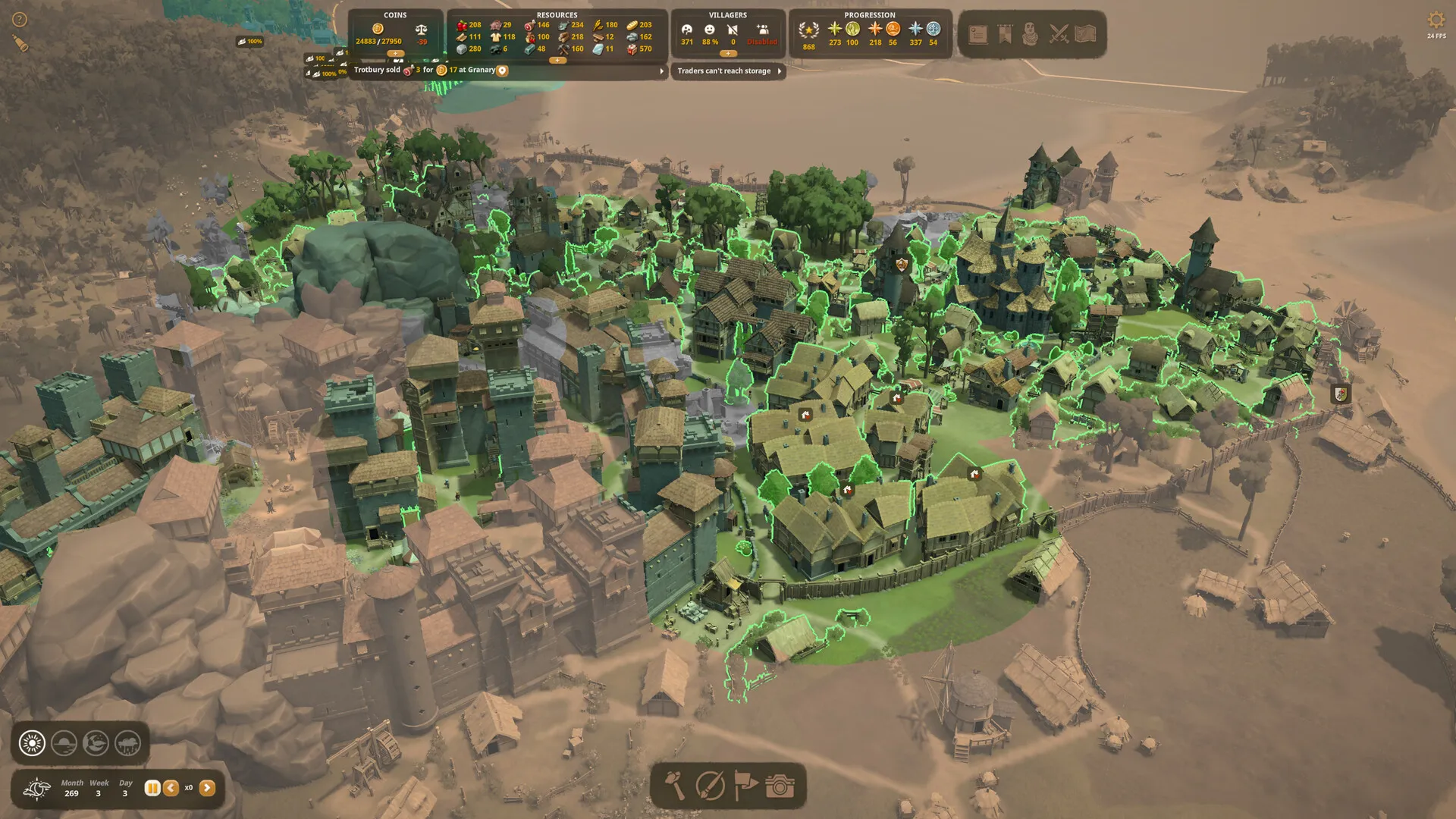
Foundation shines through its free-form building system, allowing towns to develop organically instead of following rigid grids. Zoning is your main tool for shaping the city. Residential, extraction, farming, and industrial zones help define where villagers live and work. Smart zoning creates harmony and reduces travel times, improving overall efficiency.
Separate noisy or unattractive production buildings from housing zones. Villagers prefer living near beauty, parks, and decorative elements. Use this to your advantage by designing distinct neighborhoods, farming zones, and industrial districts. Natural layouts also create visually appealing towns that feel alive and authentic.
Marketplaces serve as central gathering hubs. Place them in accessible areas surrounded by residential zones, ensuring villagers do not walk too far to obtain daily goods. As the town grows, build additional marketplaces to reduce congestion and keep the economy flowing.
5.Economy Expansion Through Trade and Monetization
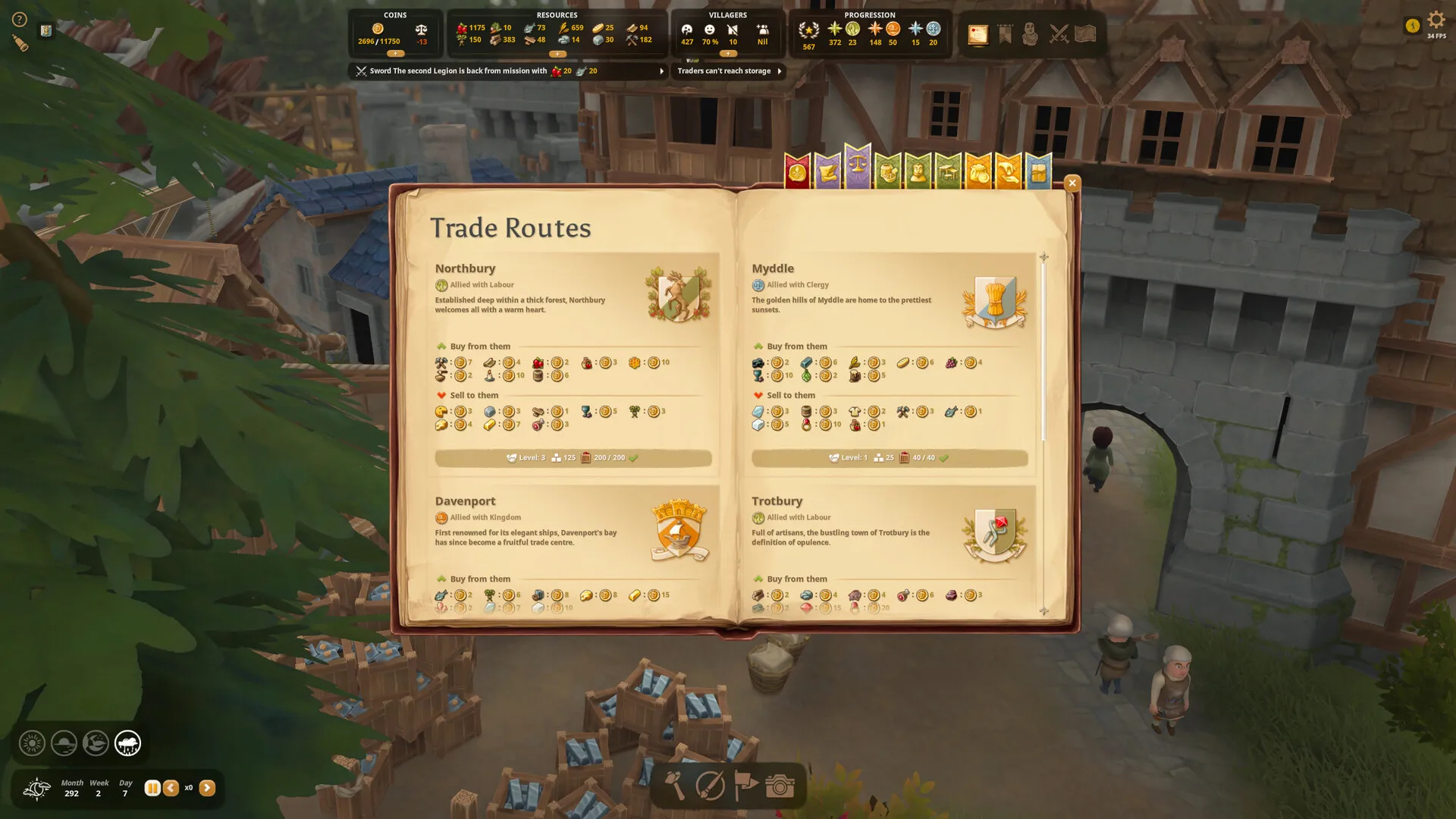
Trade is a powerful tool for expanding your economy. Foundation features multiple trade routes that allow you to buy missing resources and sell excess goods for profit. Establishing trade routes requires unlocking progression milestones, so plan ahead for which goods you want to produce early.
Start by selling surplus berries, planks, or stone to earn gold quickly. Use these profits to build more production buildings, upgrade workplaces, and invest in future industries. Once you stabilize your economy, focus on producing luxury goods such as wine, jewelry, or polished stone—these items sell for high prices and support advanced expansions.
Financial stability becomes increasingly important as your town grows. Upkeep costs rise, and buildings require more gold. Maintain a steady flow of exports while controlling unnecessary expenses. A profitable economy allows your settlement to scale into a thriving medieval metropolis.
6.Territory Expansion and Land Acquisition
Expanding territory is essential for growth. Your starting tile is limited and cannot sustain a large population. Purchase new tiles strategically based on your resource needs and long-term building plans. Prioritize tiles containing stone deposits, fertile land, water sources, or forest density. Avoid purchasing empty land too early just for the sake of expansion.
Expansion also influences your city layout. Use new territories to create dedicated farming regions, secondary industrial centers, or suburban residential zones. Proper placement keeps your town organized and prevents clutter. Always evaluate how each new tile fits into your master plan.
In the mid and late game, expansion becomes a necessity rather than a luxury. Large-scale farming, monastery complexes, and advanced industry require significant land. Buying tiles steadily ensures you always have space for future development.
7.Farming, Food Production, and Long-Term Sustainability
Food production evolves significantly as Foundation progresses. Early-game berries and fish are not enough to sustain a growing population. Mid-game farming becomes the backbone of your food economy. Build wheat farms, windmills, and bakeries to produce bread—a reliable staple for your villagers.
Later in the game, diversify your food sources. Vineyards, hunting lodges, and dairy farms introduce variety and increase villager happiness. Keep farms on fertile land, ensuring high yields. Maintain multiple granaries to store food efficiently and prevent shortages.
Food shortages are the most dangerous threat to growing towns. Always prepare in advance by monitoring consumption rates and adjusting production accordingly. Balanced food supply ensures long-term sustainability and stability.
8.Progression, Estates, and Unlocking New Opportunities
Foundation features an estate system—Labor, Clergy, and Kingdom—that influences building options, trade opportunities, and development direction. Align your settlement with the estate that best matches your goals. Labor focuses on industry, Clergy empowers religion and education, while Kingdom improves safety and military capabilities.
Progress through these estates by fulfilling quests and gaining influence points. The more influence you accumulate, the more advanced structures you unlock. Estates add depth and replayability, allowing you to pursue different strategies in future campaigns.
Choosing the right estate path helps define your town’s identity. A Clergy-based settlement becomes a religious haven, while a Labor-driven town becomes a bustling industrial hub. Each path offers unique advantages and challenges.
9.Late-Game Development and City Flourishing
Late-game Foundation introduces larger projects, complex production lines, and higher expectations for villager happiness. Monasteries, fortifications, and luxury buildings become defining landmarks of your kingdom. Ensure you have a stable economy before undertaking these expensive projects.
Late-game optimization focuses on efficiency. Upgrade workplaces, shorten travel distances, and build separate hubs for advanced industries. Maintaining order prevents your city from collapsing under its own size. Pay attention to employment, resource storage, and trade opportunities to keep your momentum strong.
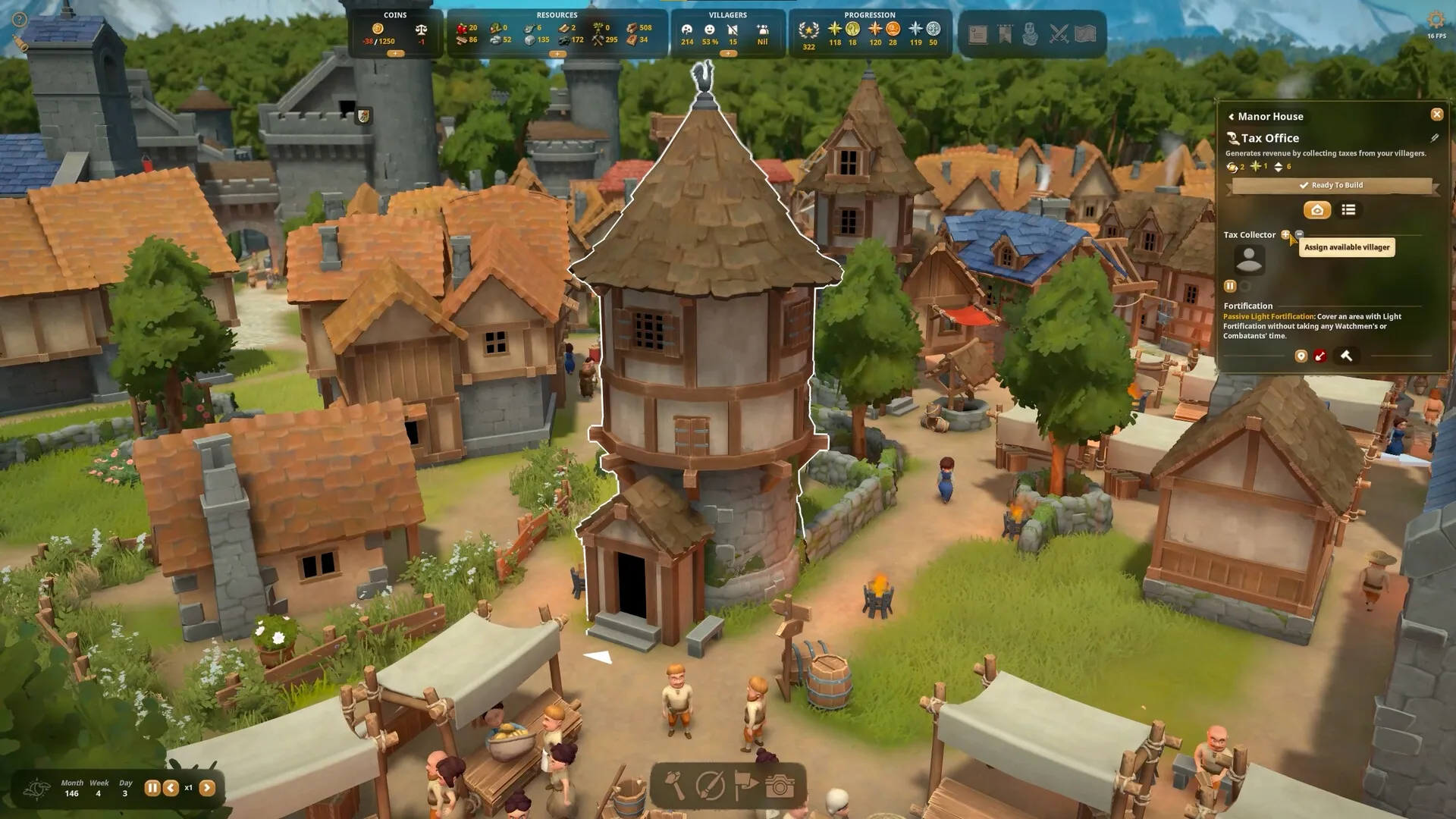
As your city flourishes, embrace creativity. Design beautiful plazas, unique neighborhoods, and impressive religious or military structures. Foundation rewards ambitious builders by offering endless opportunities to shape a medieval masterpiece.
Foundation offers a refreshing, free-form approach to medieval city building. Its focus on organic growth, villager needs, and interconnected production chains creates a deep and rewarding experience. By mastering resource flow, zoning strategy, economic expansion, and long-term planning, you can build a thriving settlement that reflects both strategic skill and artistic vision.
The beauty of Foundation lies not just in its mechanics, but in the freedom it gives players to craft their own living world. With the strategies in this guide, you’re equipped to manage your villagers efficiently, expand your territory wisely, and design a medieval city that stands the test of time.